Everyone has family — a mother, a brother, a sister. I always imagine that my own family could one day be someone’s patients, and I would want them to be treated the way I treat mine.
From the first visit to recovery
What happens at every stage. It takes the fear out of surgery.
- 01
Consultation and diagnostics
Discussing your concerns, imaging, assessment of anatomy and bite.
- 02
Dental preparation
Prosthetic or orthodontic, together with the relevant specialist.
- 03
3D planning of the result
The movement of the jaws is calculated before surgery.
- 04
Surgery
The plan is created and controlled by the surgeon himself.
- 05
Recovery and follow-up
The doctor stays with the patient at every stage.
- 01
Consultation and diagnostics
Discussing your concerns, imaging, assessment of anatomy and breathing.
- 02
3D planning of the result
The shape is calculated and matched to the anatomy before surgery.
- 03
Surgery
The plan is created and controlled by the surgeon himself.
- 04
Recovery and follow-up
The doctor stays with the patient at every stage.
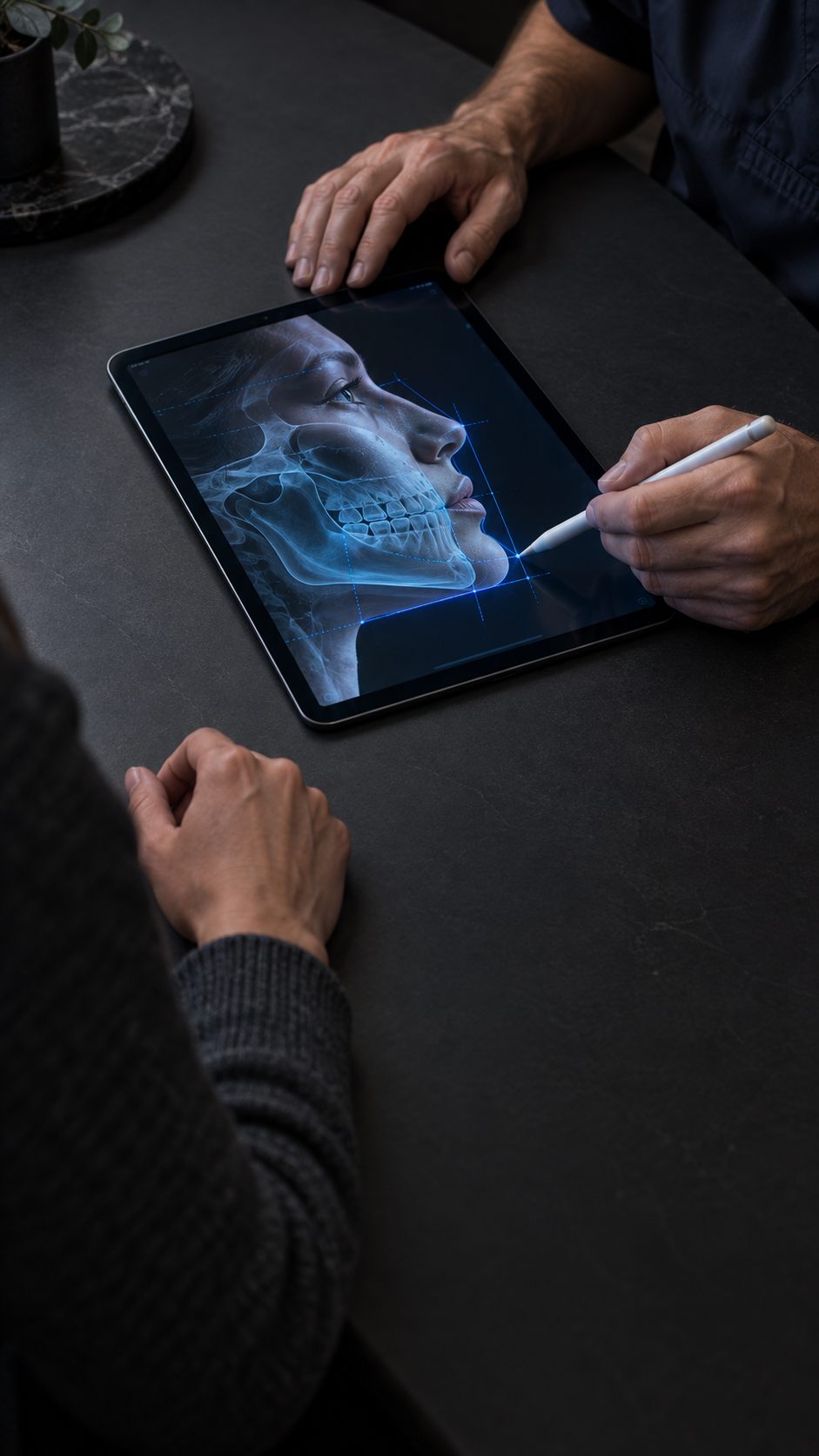
The desired result is matched to the patient’s real anatomy, and the movement of the jaws is calculated in 3D before surgery. The plan is created and controlled by the doctor himself.
Many surgeons delegate 3D planning and preparation — I take personal responsibility for it: the plan must be created by the surgeon and live in his head. After surgery and at every stage of recovery I stay with the patient: you have to lead a person by the hand from point A to point B, not leave them to find their own way.
Before surgery we send you an individual guide with a step-by-step protocol for before and after the operation. The guide (10–14 pages, depending on the type of surgery) removes any need to search for answers online: the only reference you need is the official conclusion of your treating doctor.
A carefully performed operation also means an easier recovery. In 95% of cases the patient stays in hospital for one day after surgery and is then discharged to outpatient follow-up. For 2–4 weeks the bite may be held with light rubber elastics, which can be removed for oral hygiene and meals. Swelling lasts around three days and then subsides fairly quickly — at this stage I always recommend physiotherapy, which noticeably speeds up recovery.
After surgery the soft tissues of the face move as usual, but there is always some loss of sensation; recovery times differ by area (for example, the upper lip and nostrils — up to 4 weeks, while the chin area may have reduced sensation for up to 12 months).
Recovery period.
One night in the clinic after surgery is enough. Discharge is on the morning of the following day.
There will be two follow-up dressings: on day 7 and day 14. On day 7 we remove the splints and replace the nasal cast with a new one; on day 14 we remove the cast for good and take out the stitches.
Bruising usually lasts no longer than 14 days. For the first week there will be splints (silicone plates) inside the nose, with tubes you breathe through.
Physical exercise is allowed one month after surgery
In the first days, keep your head elevated
Sleep on your back for the first month
You will be able to blow your nose 3 weeks after surgery
No glasses for 3 months
No alcohol for 1 month.
Physiotherapy is prescribed in the early postoperative period (individually, depending on the clinical case)
Follow-up visits
Day 7 — splints removed, cast replaced
Day 14 — stitches and cast removed
1 month
3 months
6 months
9 months
12 months